GDW all performance teams from Thanksgiving holiday hoops:

GDW covered 12 games in Hartselle, 12 in Hanceville for T'giving week:

GDW All performance basketball teams:

From Encore Girls Classic at Hartselle:
Most outstanding local players:
Caroline Miller of Vinemont - 62 points in 3 games, 26 vs. Susan Moore, 15 vs. Madison Academy, 21 vs. Hartselle. Hit career best 7 treys vs. Susan Moore.

Molly Wilson of Cullman - 60 points in 3 games, 11 vs. Madison Academy, 22 vs. Susan Moore, 27 vs. Hewitt Trussville.

Most outstanding non local player:
Belle Hill of Mars Hill - 29 vs. Arab, 31 vs. East Limestone, 46 vs. Mortimer Jordan. 106 points in 3 games for the Bible School from Florence.

Reagan Robinson of Vinemont
Rachel Hoffman of Cullman
Lauren Lambert of Arab

 Brooklyn Anderson of Athens
Brinlee Sams of Hartselle
Elise Boyd of Hartselle

From the 42nd Hanceville Thanksgiving Tournament:
Most outstanding local player:
Ayden Black of Cold Springs, 15 vs. Dora, 15 vs. Hartselle, 12 vs. Good Hope. A total of 42 points, an average of 14 a game for the Eagles.

Most outstanding championship game players:
Talon Laird and Jacob Bell of Corner.
Laird scored 18, Bell 17 in Corner's 59 to 53 title game win over Hartselle.


Linden Hill of Cold Springs
Kye McSwain of Good Hope
Gavin Parr of Vinemont
Will Conquest of Vinemont
Drake Bentley of Hanceville
Sam Abney of Hanceville
Buck Ross of Montevallo
Aiden Pointer of Hartselle

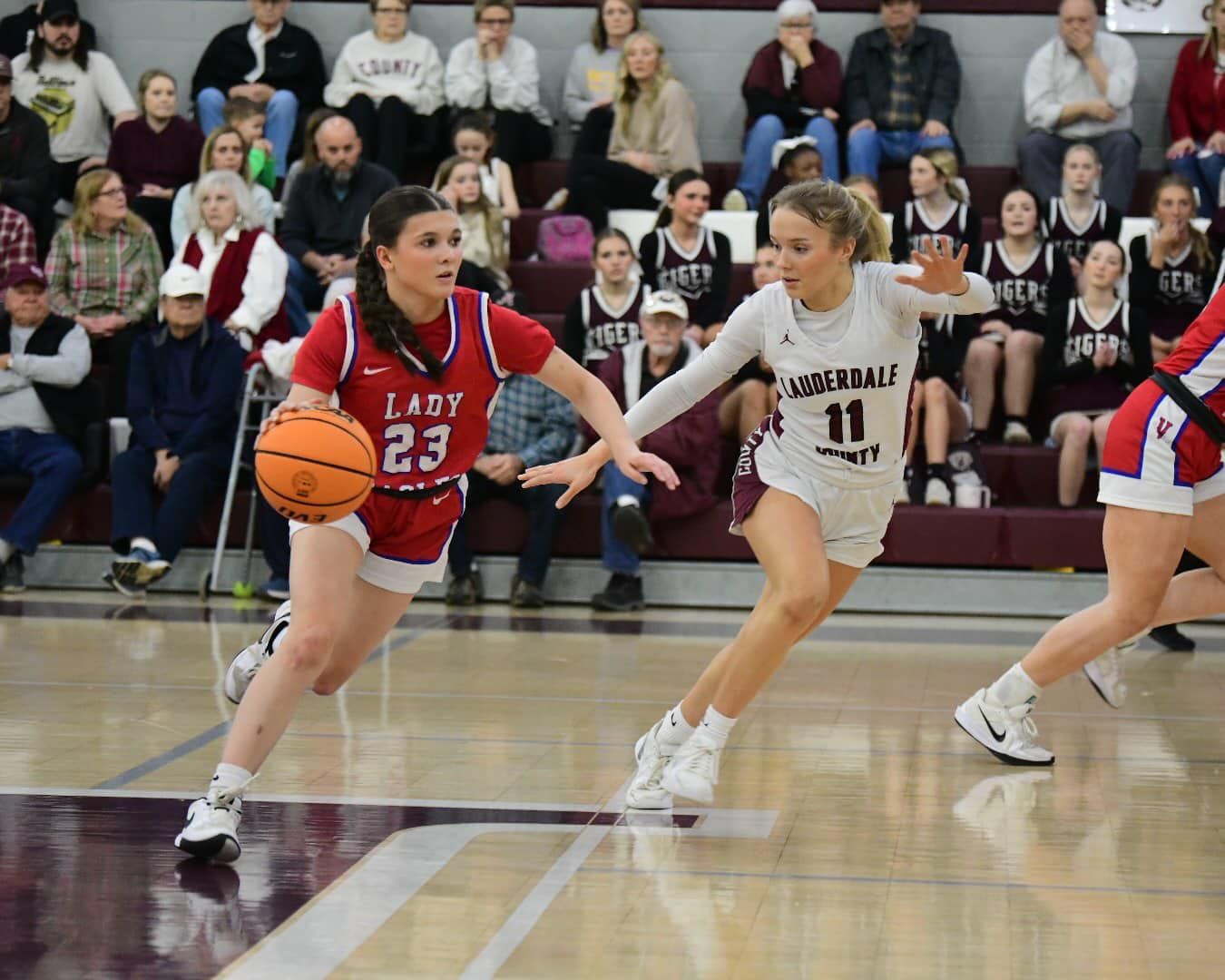
 Photo of Vinemont SG Caroline Miller in a NW Sub Regional game vs, Lauderdale County in February of 2025.
Miller led Vinemont to a 3 & 0 record at the Encore Classic, averaging 21 points a game.
Photo courtesy of Vinemont High School.

Share this Story

Advertisement for CEC online account. Laptop and phone display the website. Features include quick pay and draft payments. Available now with green and white text.
Golf ball on tee in front of the Cross Creek Golf Course logo and website address against a blurred green background.
Logo for
Car accident graphic with text: 30% of Americans need life insurance but don't have it. Contact Kathy Sims.
A Wilson basketball passing through a basketball hoop net against a black background.
By Staff Post April 15, 2026
The landscape of Alabama high school basketball is set for a significant shift following the Alabama High School Athletic Association’s (AHSAA) recent decision to implement a 35-second shot clock. This move brings the state in line with a growing national trend, moving away from the traditional format where a team could theoretically hold the ball for several minutes at a time to protect a lead. While the change has been met with general optimism from fans and recruiters, it also raises practical questions regarding the necessity of the rule and the logistical burden placed on local schools. The primary goal of the shot clock is to ensure a consistent pace of play. Under the previous rules, teams could utilize a "stall" strategy, often resulting in long periods of inactivity that drained the energy from the gym and left the trailing team with few options. A 35-second limit prevents this, requiring offenses to engage with the rim and rewarding defensive units that can force a stop through disciplined, sustained play. Furthermore, proponents argue that the change is essential for player development. With shot clocks being standard in collegiate and professional play, many feel that Alabama’s student-athletes have been at a disadvantage when transitioning to the next level. Introducing the clock in high school allows local players to develop the decision-making skills and "internal clock" required in the modern game. Despite these competitive benefits, the question of whether this change was strictly "necessary" remains a topic of debate, particularly among school administrators. The implementation brings two primary challenges: financial investment and staffing. Outfitting a gymnasium with a shot clock system—including the hardware, wireless controllers, and integration with existing scoreboards—typically costs between $5,000 and $12,000. For smaller programs or rural districts with limited athletic budgets, this represents a significant capital expense. Additionally, operating a shot clock requires a trained, dedicated official at the scorer’s table for every game. For schools already struggling to find volunteers or staff for junior varsity and varsity doubleheaders, this adds another layer of administrative difficulty. The 35-second duration is widely considered a "middle ground" approach. It is slightly longer than the 30-second collegiate clock, providing enough time for high school offenses to execute their sets without feeling overly rushed, while still being short enough to eliminate the possibility of a total stall. As we look toward the upcoming seasons, the impact of this rule change will become clearer. While the initial transition will likely involve a learning curve for players, coaches, and officials alike, the move represents a clear effort by the AHSAA to modernize the sport. Whether the benefits to the game’s flow and player recruitment outweigh the financial and logistical costs is a question that each community will navigate as the clocks begin to tick.
A blue and gold circular emblem for the 2026 County Championship Softball tournament featuring a batter and a torch.
By Staff Post April 9, 2026
GOOD HOPE RAIDERS CROWNED 2026 COUNTY CHAMPIONS
More Posts